The Pearl of Dignity
For the person with a disability, we provide the tools to navigate the world, seeing past the “broken” exterior to the pearl of their divine worth.
St. Margaret of Castello’s House
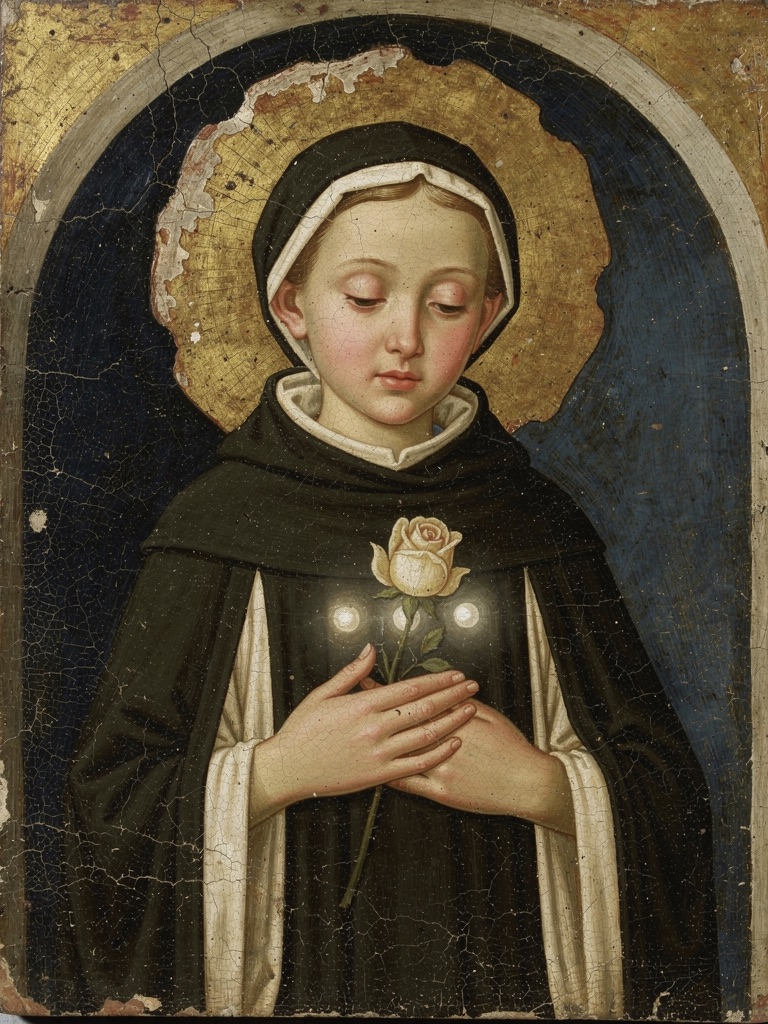
St. Margaret of Castello, 1287–1320
A Catholic sanctuary of holistic care for children and adults with disabilities — and for anyone else the world cast aside.
The systems—healthcare, education, and government—meant to protect the most vulnerable among us are not designed for those people who need those systems most. They respond only after harm is done, and only in ways that fit their failing form.
When a neurodivergent child or adult also faces poverty or the absence of family, these systems completely let go—forcing a person made in the image of God to be quietly reduced to a label and a code.
Low-income families are priced out of the equipment and therapies their children require long before adulthood. Then, in their child’s early twenties, the ground gives way.
School ends. State support vanishes. An adult with a disability falls off what advocates call the ‘Services Cliff’, and there is nothing below it. Aging parents shoulder the full weight of care until their bodies or their savings give out. When that happens, the only place left to turn to is a sterile institution.
And beneath all of this remains the question that every one of these parents spends decades lying awake wondering: What happens to my child when I’m gone?
St. Margaret of Castello’s House answers that question. We are a lifelong home for children and adults with disabilities — as well as children facing abandonment or impoverishment.
Our patron was born severely disabled, hidden away by her parents, and finally abandoned in the streets of Castello. Despite having every reason to be filled with hate, young Margaret instead spent her life caring for the sick, the imprisoned, and the dying poor—giving them the love that she herself had been denied.
Guided by our Catholic faith, and the life of St. Margaret of Castello, we build a sanctuary where dignity is given rather than earned, isolation becomes belonging, despair is met with hope, and no soul, regardless of ability or circumstance, is ever hidden, forgotten, or left to face the future alone.
Margaret was born in 1287 in Metola, Italy — blind, with severe spine curvature and physical disabilities, and barely able to walk. To her noble parents, she was a source of shame.
At the age of six, they walled her into a cell beside a chapel, where Margaret lived for years—only to be later abandoned entirely at a shrine in Castello.
Recognizing the light within her, Margaret was taken in by the poor of Castello. Joining the Dominican Third Order, she spent the rest of her short life nursing the sick, visiting prisoners, and teaching the Faith to children.
Rather than viewing her challenges as a curse, Margaret united her suffering to Christ, becoming for others a living embodiment of joy, charity, and devout faith.
Now the patron saint of the abandoned, the disabled, and the rejected, St. Margaret of Castello is the heartbeat of this house.
Her life proves that a “broken” body can hold a perfect spirit — and that those souls that the world discards are the ones Christ, and His Community, hold closest.
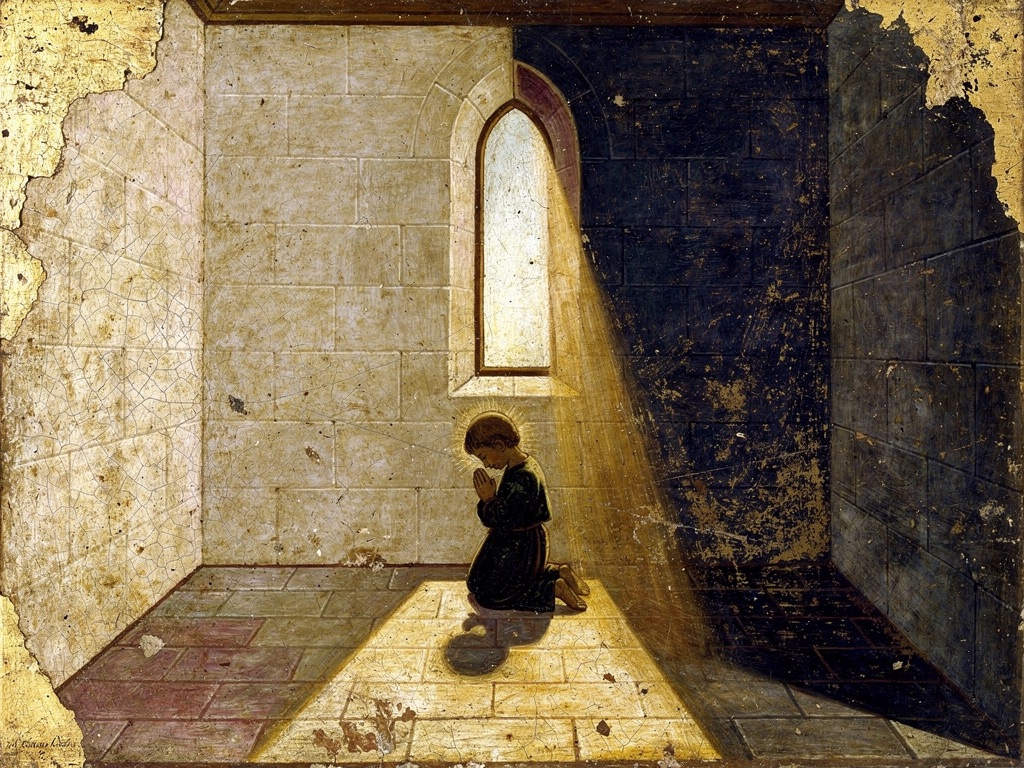
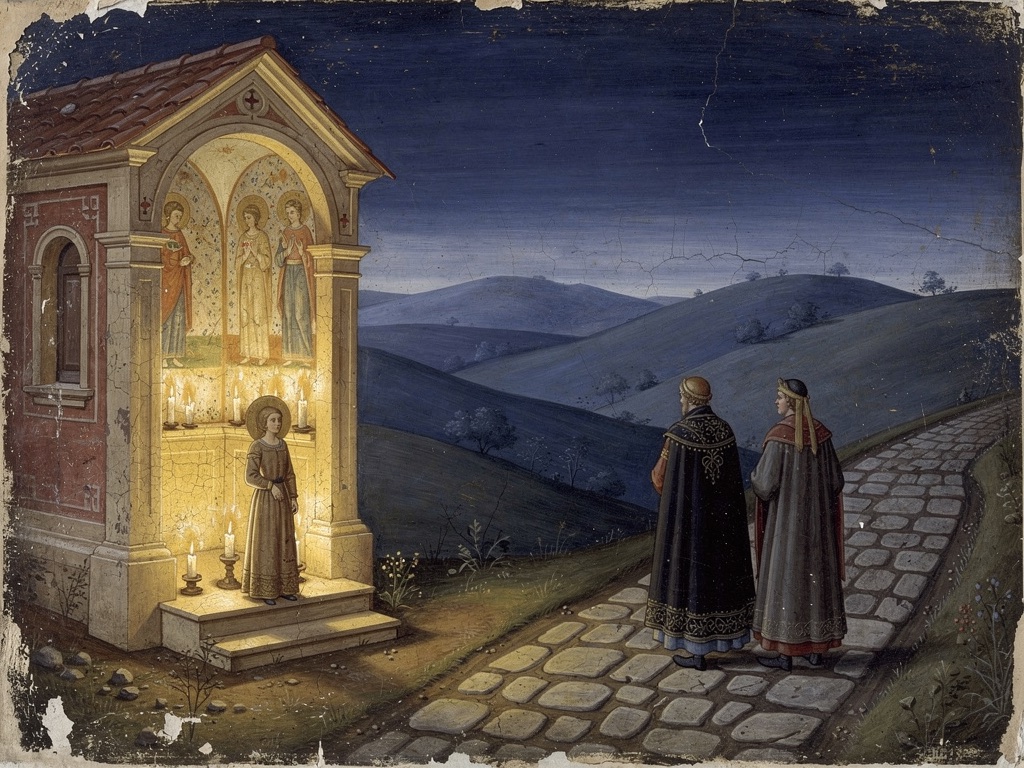
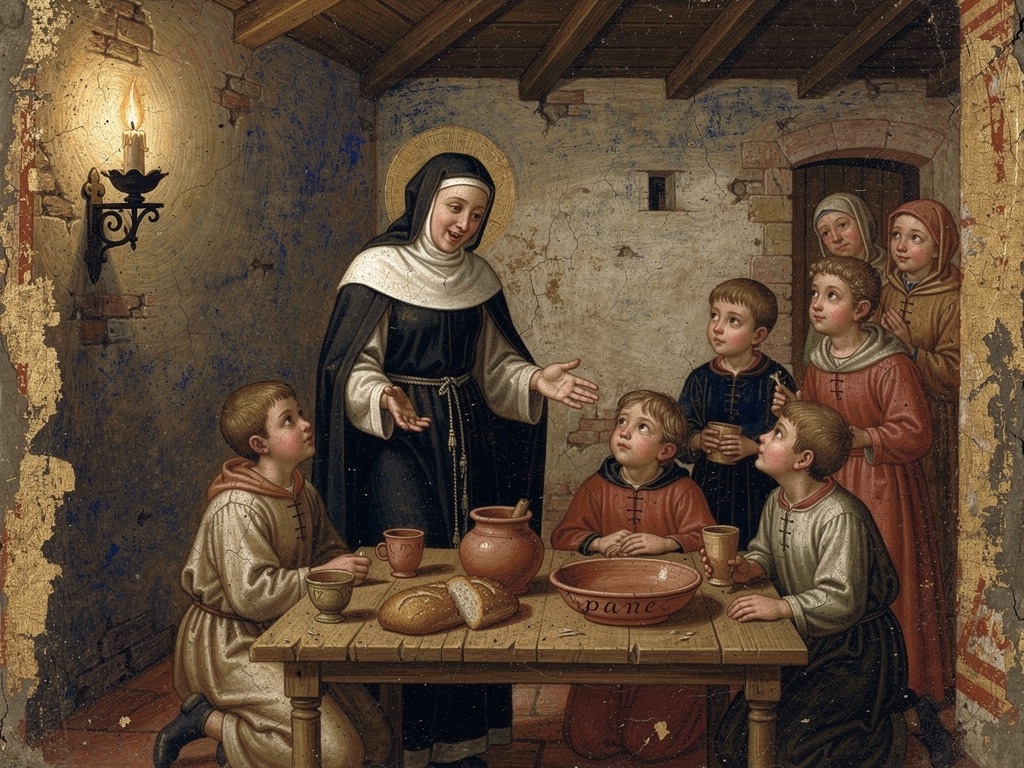
Devotional panels commissioned for this foundation, 2026.
Mission Statement
Inspired by the life and sanctity of St. Margaret of Castello, we provide a sanctuary of holistic lifelong care for children and adults with disabilities — as well as children facing abandonment or impoverishment. Through the synthesis of specialized medical and therapeutic support with the love of Christ and His Mother, we labor to ensure that no individual, regardless of ability or circumstance, is hidden, forgotten, or left to walk alone.
Vision Statement
To build a world where every individual—child or adult, regardless of ability or circumstance, is recognized with the inherent dignity of a masterpiece of God’s creation, cherished within a family of belonging and faith, and empowered with the hope to radiate their unique light and reach their fullest Christ-given potential.
The most striking testament to Margaret’s internal sanctity occurred after her death in 1320. When her body was examined, the doctors found something truly miraculous.
Inside her heart were three small pearls, each engraved with a holy image:
These “Pearls in the Heart” symbolize that even in her deepest loneliness and physical pain, Margaret was never truly alone.
She had built a domestic church within her own soul, within her beating heart.
St. Margaret of Castello’s House seeks to find the “pearls” in the hearts of children and neurodivergent adults whom society has cast aside.
For the person with a disability, we provide the tools to navigate the world, seeing past the “broken” exterior to the pearl of their divine worth.
For the abandoned child, we become the family that Margaret found in the poor of Castello.
For the impoverished child, we offer the resources to dream, proving that poverty of means does not mean poverty of spirit.
“Whatever you did for one of the least of these brothers and sisters of mine, you did for me.” Matthew 25:40
At the heart of St. Margaret of Castello’s Foundation lies our most vital partnership: our collaboration with a Catholic Religious Congregation of Women (Nuns) who serve as the primary conduits of daily care, domestic life, and spiritual formation.
This “Consecrated Presence” ensures that our foundation is never reduced to a clinical facility or an impersonal institution. The Sisters infuse our cottages and academies with the radical devotion of the evangelical counsels, ensuring that every resident is cherished as an eternal soul belonging to a warm, loving family.
We are building a home that adapts to the child, rather than forcing the child to adapt to the building.
Family-scale homes of four to six residents with consistent house parents or Sisters — a household, not a ward.
The Cottages →Corduroy texture before stairs, blister patterns before doorways, so a child who cannot see still moves through the house alone.
Sensory-adaptive design →Floor-level light shifts in colour and intensity across the day, supporting the sleep-wake rhythm so many residents fight to hold.
Sensory-adaptive design →Christ is the centre of the work, so the chapel is the centre of the plan. Wheelchair spacing sits inside every ring — never the back, never the aisle.
The Domestic Chapel →If your question isn’t here, write to us. Someone will answer personally.
Neurodivergent adults and children, children and adults with physical and developmental disabilities, and those facing abandonment or poverty. Our programmes are organised into three initiatives: Christ’s Most Forgotten for adults, Christ’s Most Innocent for children, and Christ’s Most Invisible for children facing abandonment and poverty.
No. We are a Catholic foundation, and the faith shapes everything about how we work — the chapel at the centre, the Sisters in the cottages, the conviction that every person is made in God’s image. That conviction is precisely why no one is turned away for what they believe.
It is what happens when a neurodivergent person ages out of the school system. Educational entitlements and state-funded developmental therapies end, often within a single week, and the adult system that replaces them is fragmented and heavily rationed. Over 600,000 people are currently waiting for Medicaid home- and community-based services, for an average of just over three years (KFF, 2025). Closing that gap is the reason this foundation exists.
Scale and permanence. Residents will live in cottages of four to six people with consistent house parents or Sisters, not on a ward with rotating staff. A cottage is a person’s home, not a placement they can be moved out of when funding shifts. The Cottages page sets out the model in full.
Yes. Nothing about this model is designed to replace a family. It is designed to keep families from collapsing — through respite care, parent training, and a permanent home for the day a parent can no longer provide care. An estimated 1.3 million Americans with a disability live with a caregiver over 60 (Milbank Memorial Fund). That day comes for every one of them.
Site selection is underway and we have not yet announced a location. We would rather tell you nothing than tell you something we would have to take back. When the site is settled, it will be announced here first.
Not yet — but we are building the register now. Physiatrists, therapists, nurses, special educators, attorneys and spiritual care coordinators can register their interest, and we will be in touch as roles open.
Four ways, all of them real: volunteer, join the clinical register, partner with us if you represent a diocese, hospital or foundation, or pray. If you belong to a religious congregation of women discerning a new apostolate, please read this.
Stand With Us
Every person in this house will be here because someone chose them. That is the whole of it.
Sit with an infant. Read with a child. Be the grandparent someone never had.
Volunteer with us →Physicians, therapists, nurses, special educators and attorneys. The clinical register is open.
Join the register →An on-site convent, a defined apostolate, and integration at the highest level of daily life.
An invitation →For dioceses, hospitals, foundations, universities and prospective board members.
Build this with us →Physicians and therapists. Educators and attorneys. Religious communities. Builders. And people who will simply pray until the doors open.
Write to us directly at collin@stmargaretofcastelloshouse.org, or use the form. Someone will write back personally.